If you have ever pushed hard in a workout and woken up the next morning barely able to walk down the stairs, you already know what post-workout muscle soreness feels like. It is one of the most common experiences for athletes and active people at every level. While some soreness is a normal part of training, excessive or prolonged muscle pain can slow your progress and affect your performance. If you are looking for a trusted chiropractor in SW Calgary that supports active recovery, understanding how sports massage helps reduce muscle soreness is a great starting point.
What Is Post-Workout Muscle Soreness?
Not all muscle soreness is the same. There are two main types that athletes and active people experience.
The first is acute soreness—the burning feeling you get during or immediately after intense exercise. This is caused by the buildup of metabolic byproducts during activity and typically fades quickly.
The second—and more familiar to most people—is delayed onset muscle soreness (DOMS).
Delayed Onset Muscle Soreness (DOMS)
DOMS typically develops 12 to 24 hours after exercise and peaks around 24 to 72 hours later. It is that deep, achy stiffness that makes everyday movements feel surprisingly difficult after a hard session.
DOMS is caused by microscopic damage to muscle fibres during exercise—particularly during activities that involve eccentric muscle contractions, like running downhill, lowering weights slowly, or doing deep squats.
The soreness itself is part of the repair and adaptation process that makes muscles stronger over time. But that does not make it any less uncomfortable—and unmanaged DOMS can reduce training frequency, affect movement quality, and increase injury risk.
What Is Sports Massage?
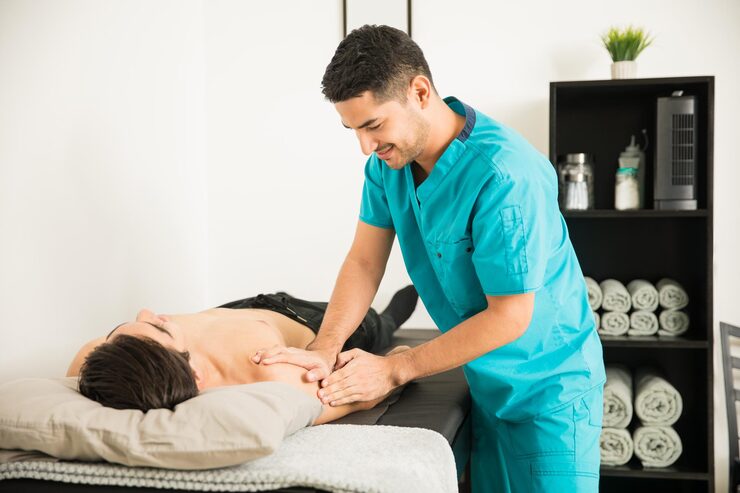
Sports massage is a targeted, therapeutic form of massage designed specifically for people who are physically active. It focuses on the muscle groups and soft tissues most affected by training and sport.
If you are searching for a sports massage near you, it is worth knowing that sports massage is different from a standard relaxation massage. The techniques are more specific, the pressure is more purposeful, and the goal is therapeutic — not just general relaxation.
Sports massage can be used at different stages of training:
- Pre-event—to warm up muscles and improve circulation before activity
- Post-event—to aid recovery and reduce soreness after training or competition
- Maintenance—as part of a regular recovery routine to keep muscles healthy
- Rehabilitation—to support recovery from injury alongside other treatment
For the purpose of this blog, the focus is on post-workout recovery—and why sports massage is so effective at reducing DOMS and keeping the body ready to train again.
How Sports Massage Reduces Muscle Soreness
Here is a clear breakdown of exactly why sports massage works so well for post-workout recovery:
It Improves Blood Circulation
One of the primary effects of massage is increased blood flow to the treated area. Better circulation means more oxygen and nutrients are delivered to damaged muscle tissue—which accelerates the repair process.
Improved circulation also helps flush out metabolic waste products that accumulate in muscles during exercise. The faster these are cleared, the faster soreness begins to ease.
It Reduces Muscle Tension and Stiffness
When the muscles are heavily exercised, they tend to become very stiff, developing “trigger points” or “knots” in some locations. Trigger points tend to be responsible for a lot of the pain experienced with DOMS.
Sports massage targets these areas directly, using specific techniques to release tension, soften tight tissue, and restore normal muscle length and flexibility.
It Reduces Inflammation
Research into massage and muscle recovery consistently shows that massage helps reduce markers of inflammation in muscle tissue after exercise. Less inflammation means less pain—and a faster return to comfortable, full movement.
It Stimulates the Lymphatic System
The lymphatic system removes waste and excess fluid from body tissues. Sports massage stimulates lymphatic drainage—helping to reduce swelling in sore muscles and supporting the body’s natural recovery process.
It Has a Direct Effect on Pain Perception
Massage stimulates sensory receptors in the skin and muscle tissue that influence how the nervous system processes pain signals. This is sometimes referred to as the gate control theory of pain. In practical terms, massage can reduce how much soreness you actually feel, not just how much tissue damage is present.
Deep Tissue Massage for Athletes — What Makes It Different?
Deep tissue massage is a specific technique used within sports massage that works on the deeper layers of muscle and connective tissue.
Where lighter massage techniques work on surface tissue, deep tissue massage uses sustained pressure and slow, deliberate strokes to reach the deeper muscle fibres that standard massage cannot fully address.
As such, deep tissue massage is very beneficial for:
- Long-standing tightness of the muscle not relieved by lighter massage techniques
- Recovering from a very strenuous training session or competition
- Addressing long-standing areas of tension that affect movement and performance
- Releasing fascial restrictions—tightness in the connective tissue surrounding muscles
Deep tissue massage for athletes may feel more intense during the session—but the recovery benefits are significant, particularly for athletes who train at high volumes or intensities.
How Often Should Athletes Get Sports Massage?
Frequency depends on your training load, your sport, and your individual recovery needs. Here is a general guide:
| Training Level | Suggested Frequency |
| Recreational exercise | Once or twice per month |
| Regular training 3 to 4 times per week | Every 2 to 3 weeks |
| High-volume or competitive training | Weekly or after each significant training block |
| During injury rehabilitation | As directed by your healthcare provider |
Your therapist will recommend a schedule that suits your specific training demands and recovery goals.
Sports Massage vs Other Recovery Methods
Sports massage works best as part of a broader recovery approach. Here is how it compares to and complements other common recovery methods:
| Recovery Method | What It Does Well | Limitation |
| Sports massage | Reduces tension, inflammation, and DOMS | Requires a professional appointment |
| Ice bath or cold therapy | Reduces acute inflammation quickly | Less effective for DOMS specifically |
| Stretching and mobility work | Maintains flexibility and range of motion | Does not address deep tissue tension |
| Foam rolling | Accessible and convenient self-massage | Less precise than a professional massage |
| Rest and sleep | Essential for all recovery processes | Passive, does not actively treat tissue |
Combining sports massage with good sleep, adequate nutrition, and active recovery gives athletes the most complete recovery approach available.
What to Expect at a Sports Massage Appointment
If you have never had a sports massage before, knowing what to expect makes the experience much easier.
Here is a simple overview:
- Consultation—your therapist asks about your training, any areas of soreness, and your goals for the session
- Assessment—They may assess your posture and movement briefly before beginning
- Treatment—the massage focuses on the muscle groups most relevant to your training and recovery needs
- Post-massage advice—you will receive guidance on hydration, stretching, and any follow-up care recommended
It is normal to feel some tenderness during deeper techniques—but the therapist will always work within your comfort level.
Recovery Is Part of the Training Process
Post-workout muscle soreness is a natural part of pushing your body to improve. But managing it effectively is what allows you to train consistently, perform at your best, and reduce your risk of injury over time. Sports massage is one of the most effective tools available for exactly that.
At Calgary Spine and Sport, we realize how important it is to stay active and are committed to getting you back on track sooner and playing better. From muscle fatigue after training or from your daily activities to pain from injury or from the sport you love, we are here to assist you. Schedule an appointment today and learn more about recovering smarter and getting to your peak more efficiently.
Frequently Asked Questions
When should I book a sports massage for my post-workout massage?
It is usually best to wait 24-48 hours after intense exercise so that the inflammatory response has subsided to allow the body to be worked deeper at a sports massage post-workout.
Will sports massage make DOMS worse before it gets better?
Some mild increase in tenderness immediately after a deep massage session is possible—but this typically settles within 24 hours and is followed by noticeably reduced soreness and improved movement.
Does sports massage help prevent injuries?
Yes, regular sports massage allows potential problem areas to be located, which are then released before an injury can occur and, as such, is an integral part of any injury prevention plan.
Is sports massage suitable for beginners or only elite athletes?
Sports massage is beneficial for anyone who exercises regularly—from beginners experiencing their first DOMS to elite athletes managing high training loads. The approach is simply adjusted to suit individual needs and fitness levels.